
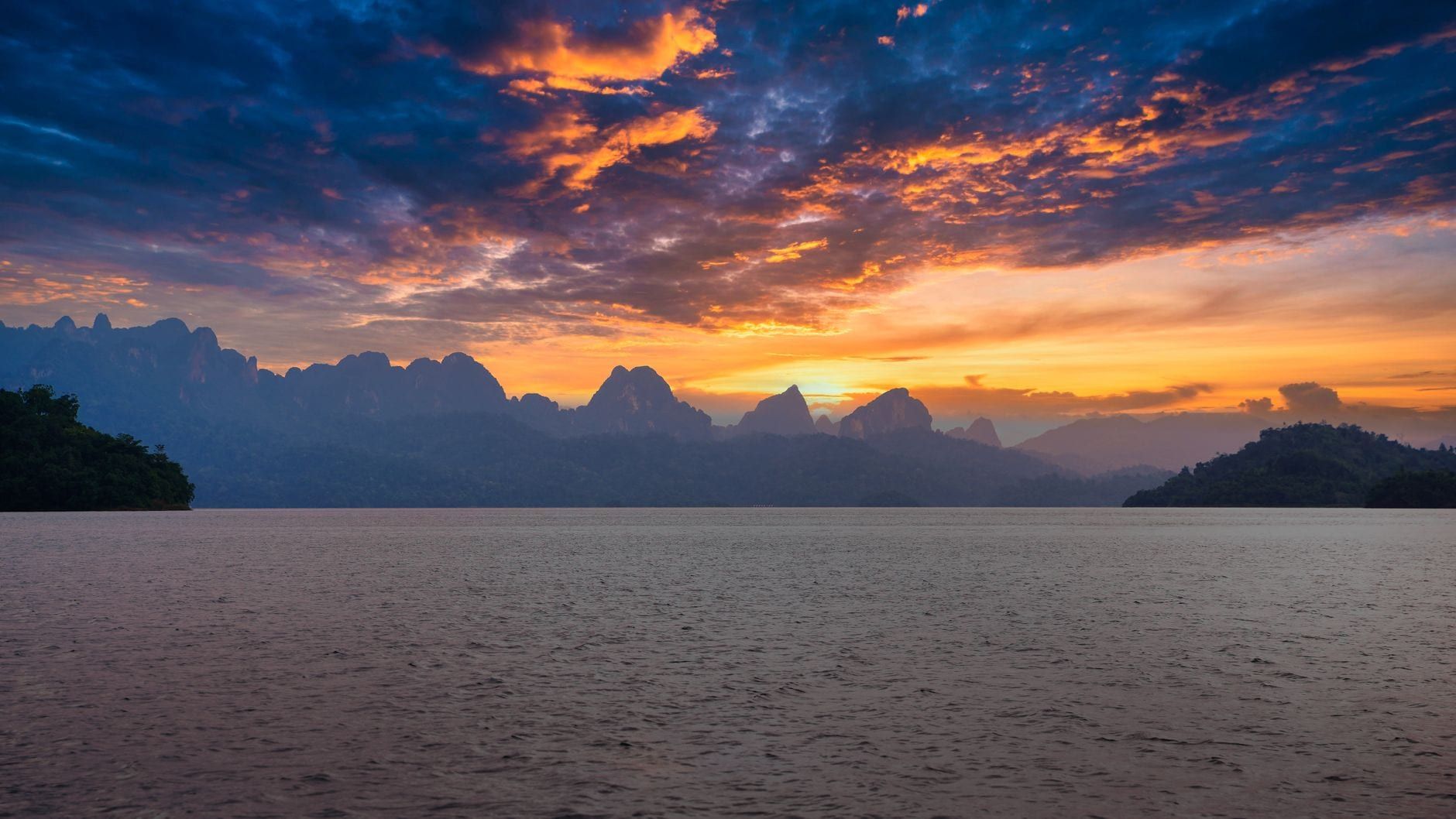
Long-tailed macaques bark from the trees around Khao Sok's headquarters before you've even unpacked, and gibbons start calling at first light. That part's easy. The park's 739 square kilometres of rainforest and limestone karst hide a lot more than they show on a two-hour walk, and knowing where and when to look changes what your trip actually delivers.
This rainforest is reckoned to be older than the Amazon's, having escaped the ice ages that reshaped forests elsewhere, and its age shows in the size of the trees and the density of what lives under them. Add Cheow Lan Lake's flooded karst valleys and you get two distinct wildlife worlds in a single park: jungle canopy and open shoreline. Everything here is genuinely wild — nothing baited, nothing fenced — so the right activity matters more than luck. Our Khao Sok overview covers the park's layout and history in full.
Why Khao Sok Is One of Thailand's Richest Wildlife Habitats
Thailand's equatorial position spared this forest the extreme climate swings that reshaped rainforests elsewhere during past ice ages, so it never had to rebuild from scratch. The park covers 739 km² and was gazetted as Thailand's 22nd national park on 22 December 1980. It sits inside something much bigger: five connected national parks and wildlife sanctuaries that together form the largest block of protected forest in southern Thailand, giving wide-ranging animals like elephants and gaur far more room to roam than a single small reserve could offer.
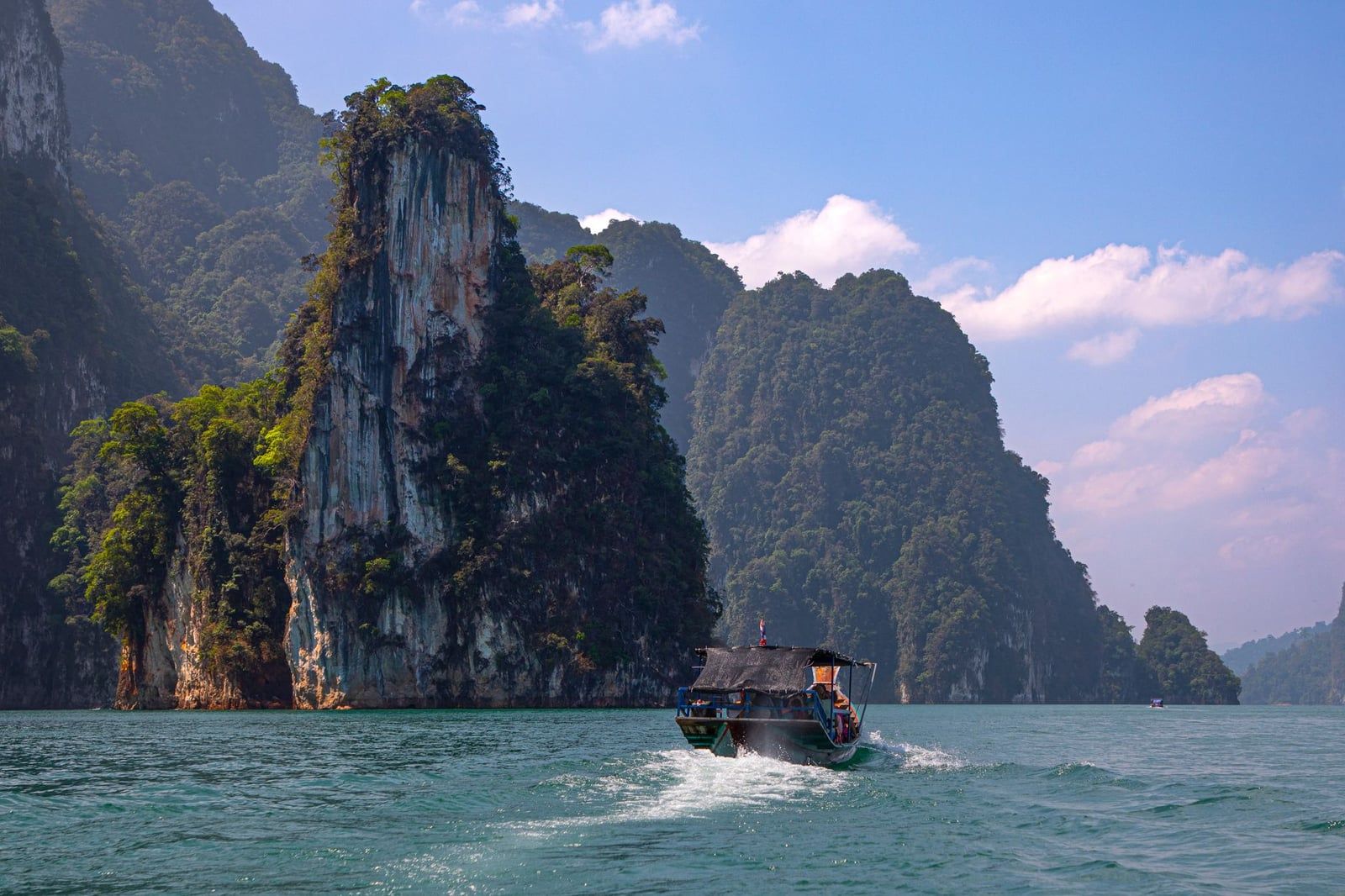
Cheow Lan Lake adds a second habitat entirely. Formed when the Ratchaprapha Dam flooded the valley in the early 1980s, the reservoir covers 165 km² and is scattered with limestone islands that look like drowned mountain peaks. Jungle wildlife and lake wildlife barely overlap — a trek near headquarters and a boat trip on the lake are two different wildlife-watching trips, not two versions of the same one.
Numbers vary by source, but Khao Sok is estimated to hold more than 5% of the world's species inside a comparatively small area: around 48 mammal species, 300 or more bird species (one park database counts 393), 30-plus bat species, and upward of 80 reptile and 40 amphibian species. None of that guarantees a sighting on any given walk. This is a working rainforest, not an enclosure — animals move on their own schedule, and a guide who knows the calls and the fruiting trees will show you more in two hours than a solo wander shows in two days.
Mammals You Can Realistically See (and the Ones You Probably Won't)
Forty-eight mammal species live in Khao Sok, and your odds of seeing them differ enormously by species. Sorting them by likelihood, rather than alphabetically, is a lot more useful for planning a trip.
Commonly Seen: Macaques, Langurs and Gibbons
Long-tailed macaques and southern pig-tailed macaques turn up around the headquarters and riverbanks daily, often before you've gone looking for anything. Dusky leaf monkeys travel in troops through the canopy, their pale orange-faced juveniles standing out against the gray-black adults. White-handed gibbons are heard far more than seen — their whooping duets carry through the forest at dawn — but patient trekkers on quieter trails do catch them swinging through the mid-canopy. A guide who knows which trees are fruiting that week will put you in the right spot at the right time.
Occasionally Seen: Elephants, Gaur and Deer on the Water
Wild Asian elephants and gaur, the Indian bison, are Khao Sok's biggest mammal draws, and both turn up most reliably along Cheow Lan Lake's exposed shorelines rather than deep in the jungle interior. Gaur bulls can stand 2.2 metres at the shoulder and weigh up to 1,500 kg, grazing in small groups where the tree line thins near the water. Sambar deer and wild boar work the same shoreline strip, especially at dawn and dusk when the heat breaks. None of it is scripted: a boat safari can turn up nothing for an hour, then round a headland into three gaur browsing at the water's edge. Anyone drawn here specifically for elephants should read our guide to visiting Khao Sok's elephants ethically before booking anything that promises a guaranteed encounter.
Rare and Elusive: Tapirs, Sun Bears and Wild Cats
Malayan tapirs, Malayan sun bears, leopard cats and serow all live in Khao Sok, but seeing one is closer to a lottery win than a booking outcome. Tapirs are nocturnal and solitary, sun bears stay deep in the understory, and leopard cats hunt mostly after dark near water. Most visitors who do see one of these get the sighting on a night safari, and even then it's usually a flash of eyes in a spotlight beam, not a lingering look.
The Tiger Question
Khao Sok has no confirmed resident tiger population today. Tigers were recorded historically across this part of southern Thailand, but decades of camera-trap surveys in the park and its surrounding forest complex haven't turned up evidence of a breeding population, and local guides will tell you the same. Clouded leopards and marbled cats, the latter listed Near Threatened, are a different case — both exist in Khao Sok's forest, but almost exclusively as camera-trap photos rather than trail sightings. If an operator promises a clouded leopard on a two-hour walk, treat that as a warning sign, not a selling point.
Birds, Hornbills and Kingfishers of Khao Sok
Bird counts for Khao Sok range from 'over 300' to the 393 species listed in one park database, and the gap comes down to survey methodology, not the forest getting richer or poorer year to year. Either way, this ranks among southern Thailand's best birdwatching parks, and you don't need a scope to enjoy the highlights.
Great and Oriental Pied Hornbills
The Great Hornbill is the one everyone hopes for: a wingspan close to 2 metres and a whooshing sound in flight loud enough to hear before you spot the bird. Oriental Pied Hornbills are smaller and more frequently seen, gathering at fig trees especially between October and February when they're fruiting. Both species nest in tree cavities that the male seals shut with mud around the female during incubation, feeding her through a narrow slit until the chicks are ready to fledge.
Kingfishers and Birds of Prey
About a dozen kingfisher species work Khao Sok's rivers and lake edges, from the common kingfisher's electric-blue dart to the far larger stork-billed kingfisher perched motionless over the water. Overhead, ospreys, brahminy kites and grey-headed fish eagles circle the lake hunting the same fish. Early morning, before boat traffic picks up, is when all of them are easiest to pick out against the karst backdrop.
Reptiles, Amphibians, Insects and the Rafflesia Flower
Beyond the mammals and birds, Khao Sok's smaller residents fill in the rest of the picture — snakes, frogs, a genuine biological oddity, and a flower that's the size of a bicycle wheel.
Reptiles and Amphibians Along the Trails
Monitor lizards patrol riverbanks and cave mouths, some over a metre long and unbothered by passing hikers. Snakes are around too, mostly non-venomous tree snakes and pythons, but sightings tend to be incidental rather than something a guide goes looking for. Khao Sok's reptile count runs past 80 species by some estimates, and most of them a visitor will never notice.
The strangest resident is one you'd never spot without knowing to look: Scolopendra cataracta, the world's only known amphibious centipede, growing up to 20cm long. It was discovered near Khao Sok in 2001 and swims as easily as it crawls, hunting along stream banks after dark. Tree frogs and stream frogs get noticeably louder and more active right after rain, turning an evening walk into a wall of sound.
Insects and the Rainforest Soundscape
Cicadas supply the daytime soundtrack, a rising drone that can hit an uncomfortable volume by midday, and butterflies are easiest to find near patches of sunlight along the trails. None of this needs a guide or a booking — just slow down and listen.
Rafflesia Kerrii: The World's Largest Flower
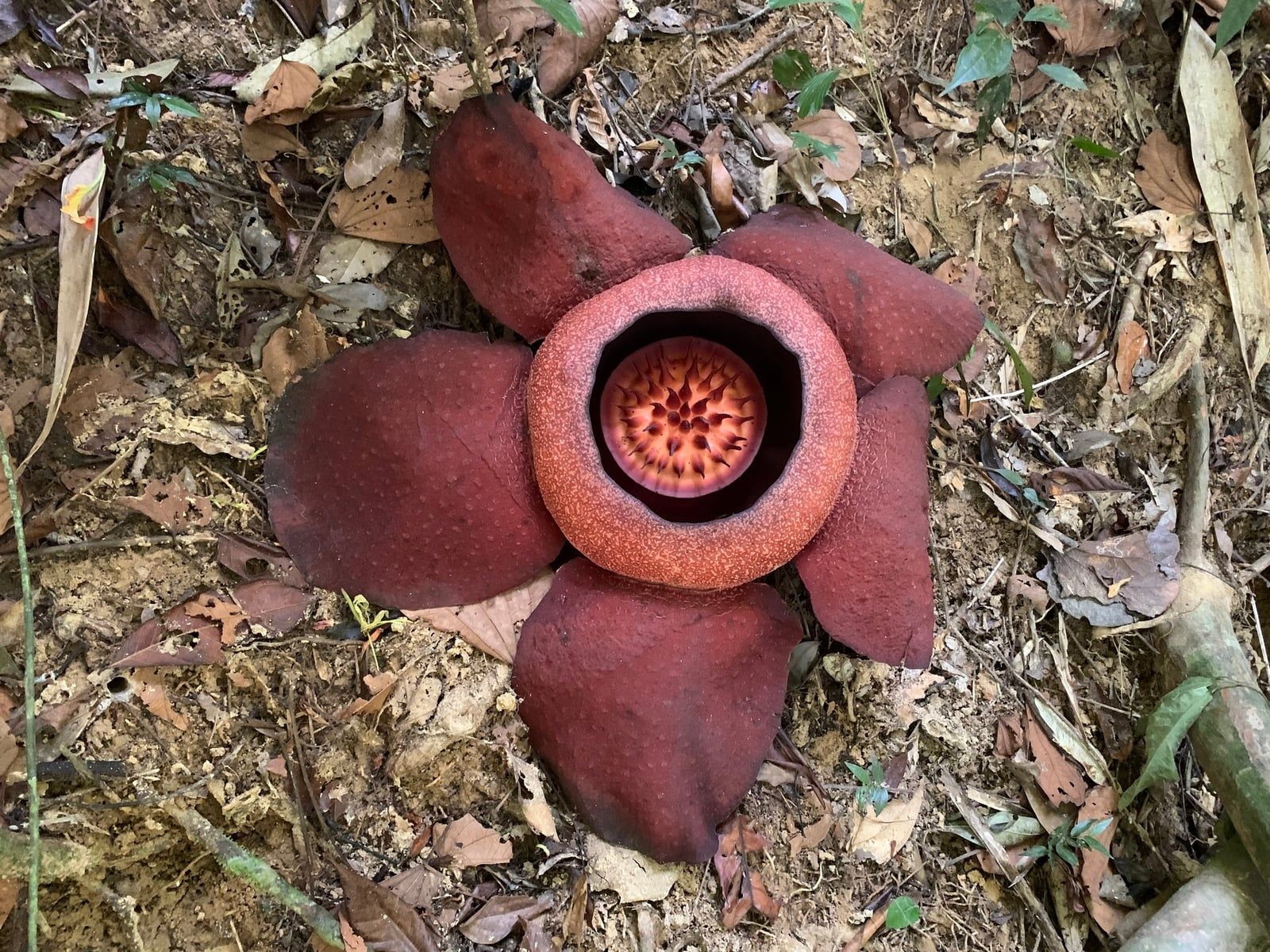
The park's strangest botanical resident can open to nearly a metre across. Rafflesia kerrii is Surat Thani's official symbolic flower, parasitic with no leaves or stem of its own, and it blooms from a host vine deep in the forest for only a few days at a time, typically between December and March. Finding one takes a guided hike up a steep, specific trail and a fair amount of luck with timing — ask which routes have had recent blooms before committing to the climb.
Endangered and Rare Species: What's at Risk in Khao Sok
The IUCN's status labels run from Vulnerable, a species facing a real but not immediate extinction risk, through Endangered to Critically Endangered, and Khao Sok has species at every level. Gaur, sun bears, serow and spectacled langurs are all listed Vulnerable, present in reasonable numbers here even as their populations shrink across the wider region.
Malayan tapirs, white-handed gibbons, clouded leopards and Asian elephants carry Endangered status, which means Khao Sok's forest is one of a shrinking number of places any of them still live wild. The Malayan tiger and Sunda pangolin rank Critically Endangered, and as covered above, tigers appear to be functionally absent from the park despite the historical record.
The lake itself tells a conservation story. When the Ratchaprapha Dam flooded the valley in the early 1980s, a 1995 study found the river system had lost roughly 52 fish species as flowing water turned into a still reservoir. Khao Sok remains the last natural Thai habitat of the Asian arowana, an endangered 'living fossil' fish that still survives in the park's rivers.
There's no captive breeding program or fenced sanctuary doing the heavy lifting here. The main lever is keeping the forest connected: elephants and gaur need corridors between Khao Sok and the neighbouring parks in its forest complex, not enclosures, and that's the case conservationists in the area keep making to Thai park authorities.
How and When to See Khao Sok's Wildlife: Treks, Lake Safaris and Night Tours
Matching the activity to the animal matters more than luck. Here's what to book for what you actually want to see.
Jungle Trekking Near Headquarters
Morning treks around Khao Sok village, roughly 6:30 to 9am, are the best window for gibbons, dusky langurs, macaques and hornbills, before the heat sends most animals into cover. Short trails here can be walked without a guide, though a guide's ear for calls turns a quiet walk into a productive one — worth the cost if wildlife, not just exercise, is the goal. Our jungle tour options cover both the short headquarters trails and longer routes deeper into the forest.
Cheow Lan Lake Boat Safaris
Elephants, gaur and grazing deer show up most often on the lake's exposed shorelines during low-water periods in the dry season, spotted from a longtail boat at dawn or in the last hour before sunset. Boats aren't permitted on the lake before sunrise or after dark, so timing a trip around those two windows is deliberate, not incidental. A lake tour or a night in a floating bungalow puts you in position for both.
Night Safaris
After dark, guided walks around park headquarters turn up civets, slow lorises, leopard cats and a chorus of nocturnal insects and frogs, spotted with a torch by their eye-shine in the undergrowth. Night safaris only run around headquarters, not on Cheow Lan Lake, and the dry season from December to April generally gives the best trail conditions. A guide is mandatory here, partly for navigation and partly because a few of the nocturnal residents — slow lorises included — deliver a venomous bite if handled.
A park entrance fee, around 300 Baht for foreign adults, applies on top of any tour cost — check current rates on the park hours and fees page before you go. Basic etiquette holds across every activity: keep real distance from elephants and gaur, never feed macaques, and let your guide set the pace around anything that seems unbothered by you, since that calm is exactly when an animal is most likely to bolt or charge. Staying overnight, in the village or on the lake, buys you the dawn and dusk windows day-trippers miss entirely — see our overnight tour options for that extra stretch of wildlife-watching time. For the wider activity list beyond wildlife, our guide to things to do in Khao Sok covers the rest of the park.
Frequently asked questions
Are there tigers in Khao Sok National Park?
No confirmed resident population exists today. Tigers were recorded historically in this part of southern Thailand, but decades of camera-trap surveys across the park and its surrounding forest complex haven't found evidence of a breeding population.
Can you see wild elephants in Khao Sok?
Yes, but it's never guaranteed. Your best chances are early morning or the last hour before sunset on a Cheow Lan Lake boat safari, especially in the dry season when low water exposes shoreline grazing areas.
What is the best time of day to see wildlife in Khao Sok?
Early morning, roughly 6:30 to 9am, and late afternoon from 4 to 6pm are best for gibbons, hornbills, elephants and gaur. After dark, a guided night safari is the way to find civets, slow lorises and leopard cats.
What is the best time of year to see wildlife in Khao Sok?
December to April, the dry season, gives the most reliable conditions for night safaris, and low lake levels expose the shoreline grazing areas that draw gaur and elephants into view.
Do I need a guide to see wildlife in Khao Sok?
Guides are required for night treks and longer remote trails, and strongly worth hiring for day treks and lake safaris too — they know the calls, fruiting trees and shoreline feeding spots that turn an empty walk into a productive one.
What animals might I see without a tour, just at my resort or in the village?
Long-tailed macaques, dusky leaf monkeys, hornbills overhead and gibbon calls at dawn are all common around park headquarters and lodges without booking anything specific.
Is it dangerous to encounter wildlife in Khao Sok?
Most animals avoid people entirely. Keep a real distance from gaur and elephants, never touch a slow loris since its bite is venomous, and follow your guide's instructions closely during night safaris.
How many species of animals live in Khao Sok National Park?
Roughly 48 mammal species, 300-plus bird species (up to 393 in one park database), 30-plus bat species, 80-plus reptile species and 40-plus amphibian species — the park is estimated to hold more than 5% of the world's species.