
About All Tours Boat ToursFloating Bungalows ToursLake ToursOvernight ToursJungle Tours Directions Hours & Fees Guides
Find Tours 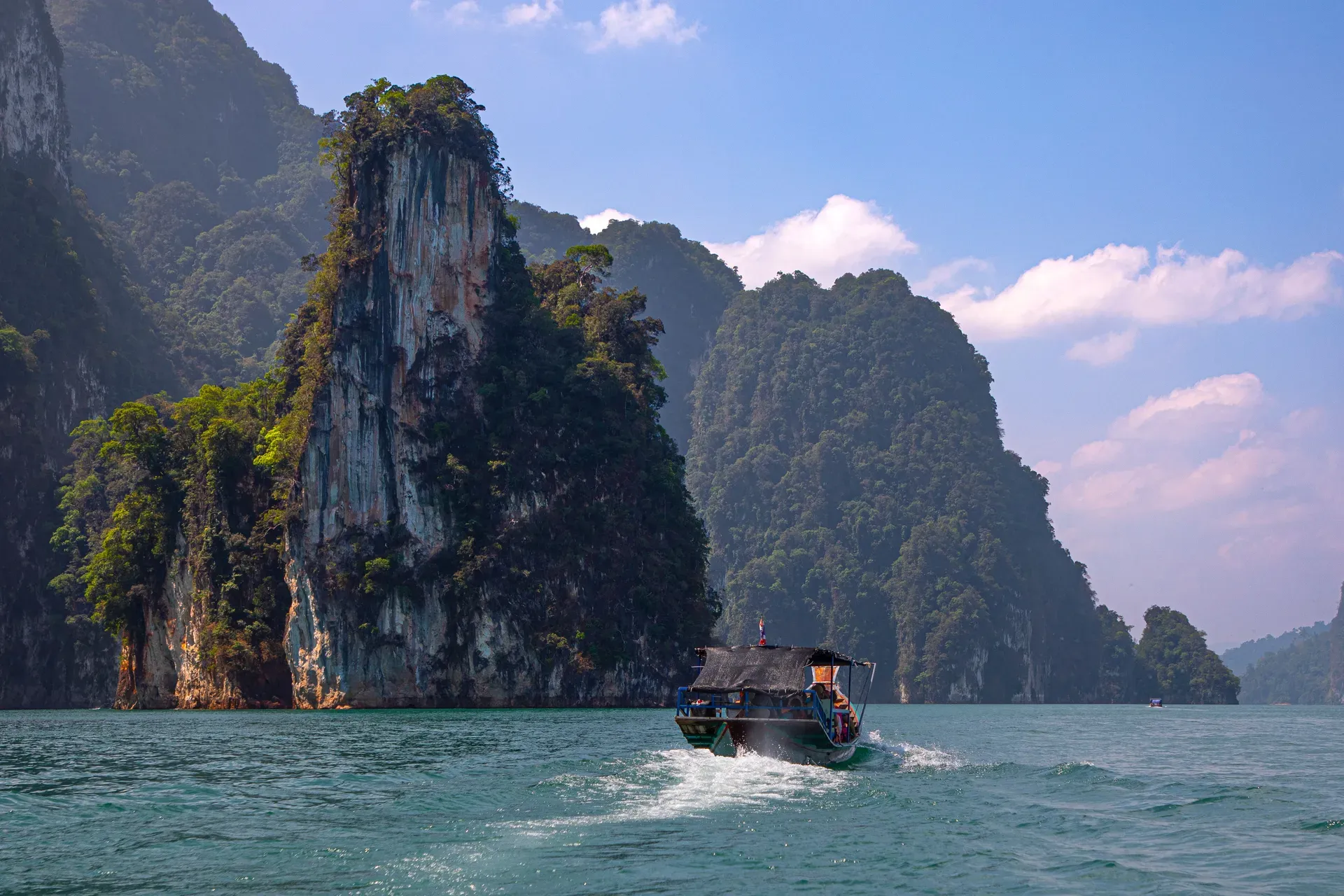
Khao Sok National Park is a 739-square-kilometer rainforest and limestone karst reserve in southern Thailand's Surat Thani Province. It protects one of the oldest evergreen rainforests on Earth and surrounds the man-made Cheow Lan Lake.
Covering 739 square kilometers of Surat Thani Province, Khao Sok National Park sits in southern Thailand. Ancient evergreen rainforest, sheer limestone karst mountains, and the 165-square-kilometer Cheow Lan Lake make up the reserve. Thailand's equatorial position shielded this specific region from past ice ages. That geological luck left the forest older and more biologically diverse than the Amazon. By connecting to the Khlong Saeng-Khao Sok Forest Complex, the park creates a contiguous protected zone of over 3,500 square kilometers. Wild Asian elephants, endangered tigers, and 311 recorded bird species live within these boundaries. Patient hikers occasionally spot gaurs, sambar deer, hornbills, and gibbons in the canopy.
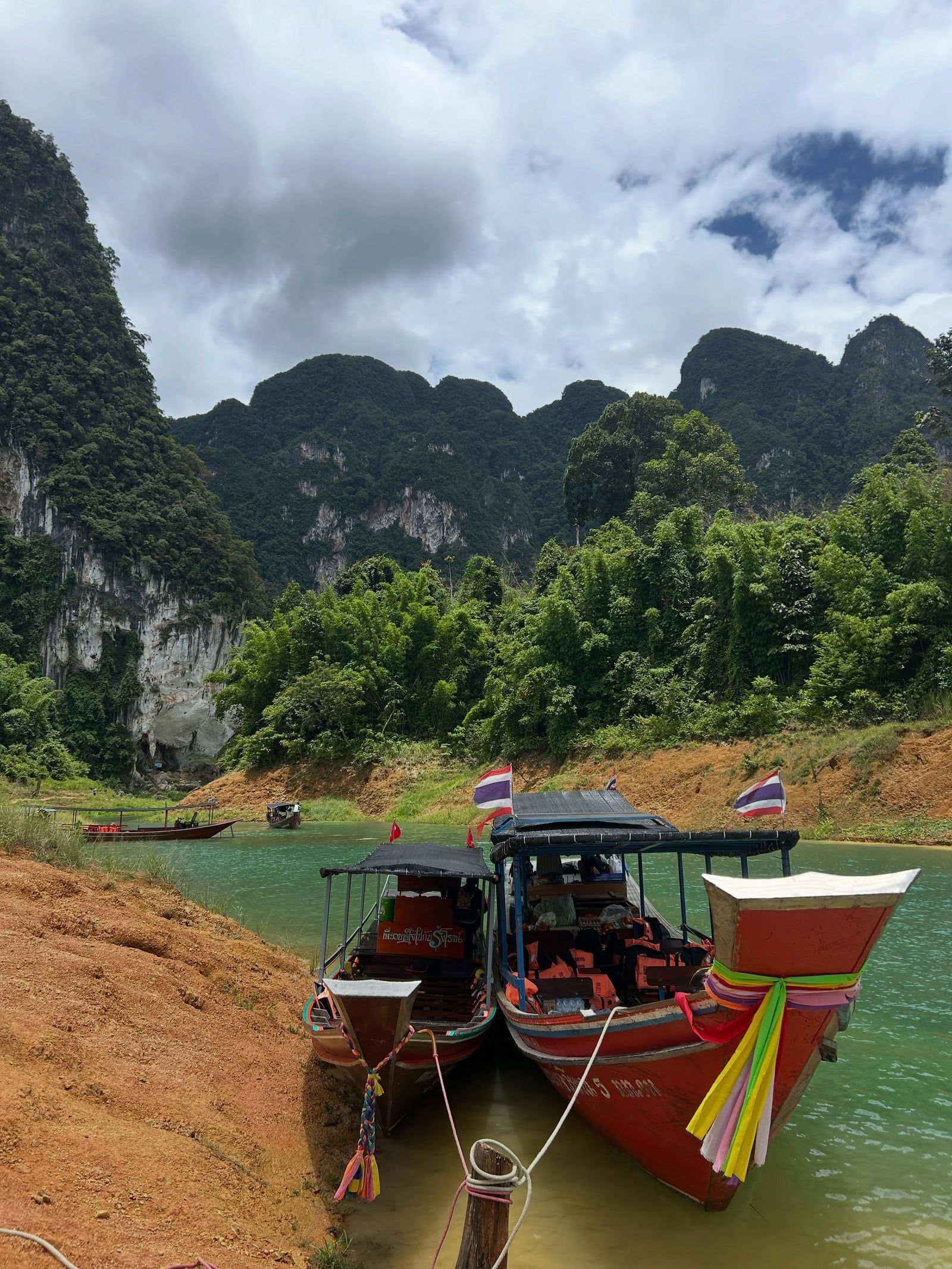
Most visitors split their time between two distinct areas. Khao Sok village sits near the park headquarters, providing access to the Sok River, jungle hiking trails, and the Sip-et Chan Waterfall. This 8.4-kilometer out-and-back trail follows the Bang Laen River through dense jungle to a natural swimming pool. An hour's drive east brings you to Cheow Lan Lake. When the Ratchaprapha Dam flooded the valley in 1982, it left only the peaks of limestone mountains exposed above the water. Floating raft houses now line the edges of these karst islands. You'll reach them entirely by long-tail boat.
Getting to the park requires a bus or taxi ride from the coastal hubs. Public buses leave Surat Thani town every hour, taking about two hours to cover the 115 kilometers to Khlong Sok village. Shared minivans from Krabi take three and a half hours. Once you arrive, you'll find the terrain rugged. The park is largely inaccessible to wheelchairs. Trails to the waterfalls are unpaved, covered in thick tree roots, and require frequent river crossings. Even the short boardwalks near the visitor center give way to uneven dirt paths. Families with young children stick to the gentle Sok River canoe trips. Older teenagers handle the muddy cave treks and night safaris.
Weather dictates the schedule here. September rains average 375 millimeters for the month, turning trails into deep mud. Flash floods routinely close the Nam Talu Cave system. From May to November, the wet season disrupts longer hiking routes and makes river crossings treacherous. December to April brings lower humidity and the best chance to spot the giant Rafflesia kerrii flower blooming on the forest floor. But this dry season is also the busiest period. Floating bungalow bookings fill up months in advance. Shoulder periods like May or October offer a solid compromise. You'll get manageable rain and much better boat availability on the lake.
A deadly epidemic in the 1940s forced early settlers to abandon the Khao Sok valley. This sudden depopulation left the primary rainforest entirely untouched by human development for decades. In 1975, communist student insurgents established a stronghold in the dense jungle caves. Their armed presence kept commercial loggers, miners, and poachers out of the area until 1982. During this exact seven-year period, rapid deforestation destroyed much of Thailand's other old-growth forests. The insurgents inadvertently saved the trees. When the political conflict ended, the government found an intact ecosystem ready for protection.
The Thai government officially declared Khao Sok the country's 22nd national park on December 22, 1980. The original gazetted area expanded shortly after to reach its current 739 square kilometers. In 1982, the Electricity Generating Authority of Thailand completed the Ratchaprapha Dam to supply hydroelectric power to the southern provinces. The dam construction required a massive logistical effort. Engineers poured millions of tons of concrete to block the Khlong Saeng River. As the water rose, it swallowed entire villages, schools, and temples. The government initiated the Chiew Larn Wildlife Rescue Operation. Teams in small boats raced against the rising water to capture and relocate over 1,300 animals from 116 different species. Many animals drowned or starved on shrinking hilltops before rescuers could reach them. The water level eventually stabilized, creating the 165-square-kilometer Cheow Lan Lake.
The creation of Cheow Lan Lake fundamentally changed the park's geography and local economy. Former valley residents transitioned into tourism. They built the first floating bamboo raft houses on the reservoir, securing long-term concessions from the government. Annual visitor numbers grew from 82,020 in 2007 to roughly 140,000 today. The park administration instituted strict zoning laws to manage this influx. Long-tail boats face curfews at sunrise and sunset. Night safaris operate only within the immediate headquarters area (guides use spotlights to find civets and slow lorises). Unethical elephant riding camps near the park borders have largely closed. Most transitioned to observation-only sanctuaries. In May 2024, the park implemented a new 300-Baht foreign adult entrance fee specifically for the Cheow Lan Lake zone. This fee applies separately from the headquarters admission, forcing visitors to pay twice for a complete tour.
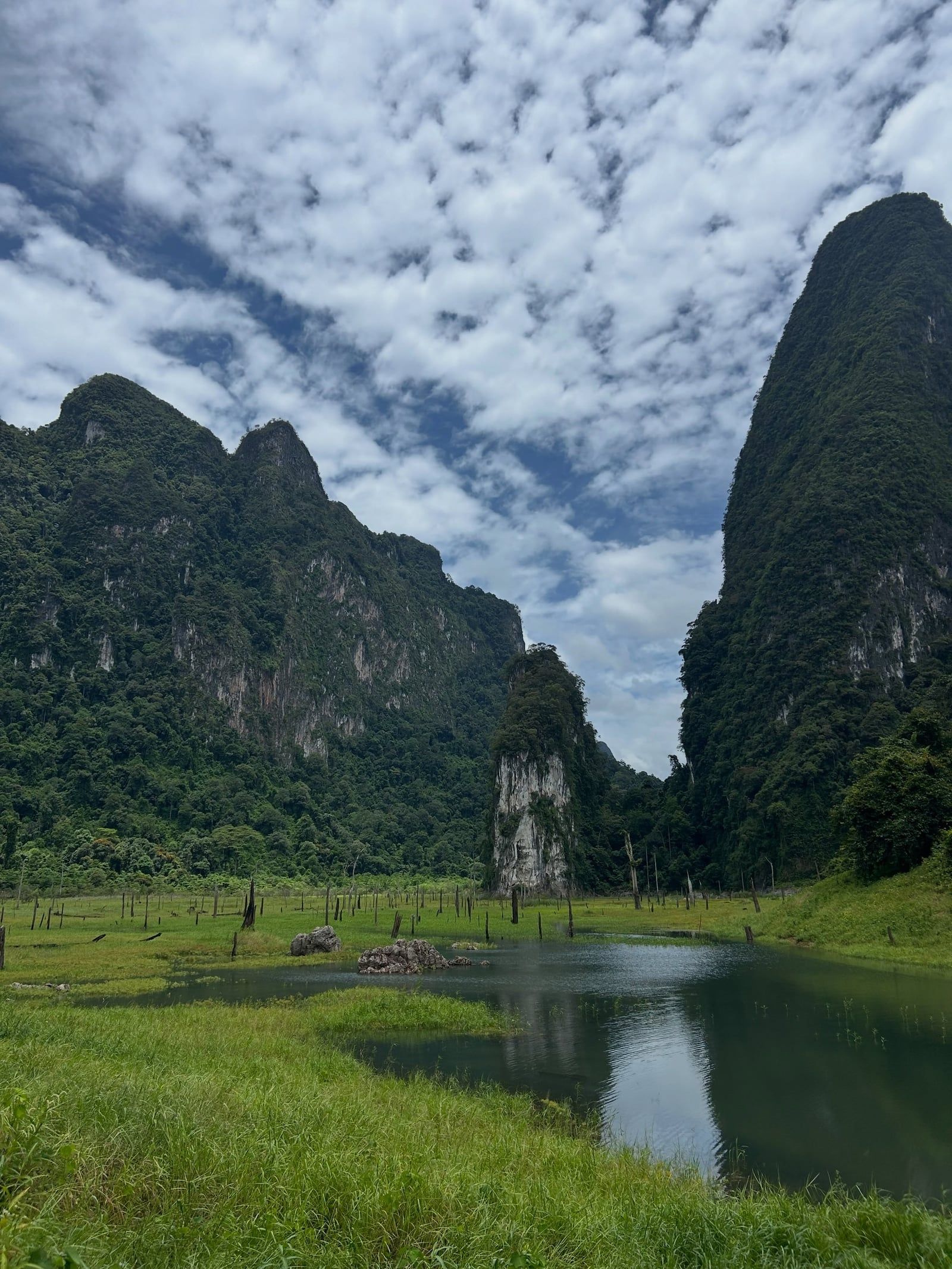
Situated within the Phuket mountain range, the park runs north from Phuket Island. Ground level across most of the reserve averages 200 meters above sea level. Sharp limestone karst peaks dominate the terrain, with the highest mountain reaching 960 meters. Tectonic shifts pushed these ancient coral reefs upward millions of years ago. Heavy rainfall—averaging 3,500 millimeters annually, the highest in Thailand—constantly erodes the porous limestone. Water action carves out the region's extensive cave systems. Inside Nam Talu Cave, a subterranean river forces visitors to wade and swim through pitch-black chambers. Meanwhile, Coral Cave holds massive stalactites covered in moss and algae.
Vegetation divides into distinct elevation zones. Foothill rainforest covers 40 percent of the park, while rainforest plains make up another 27 percent. Lowland scrub and specialized limestone crag vegetation account for 15 percent each. Only 3 percent of the park contains higher-elevation rainforest between 600 and 1,000 meters. The dense canopy supports the parasitic Rafflesia kerrii flower. This plant lacks visible leaves, stems, or roots. It grows entirely inside the vines of the Tetrastigma genus before erupting into a massive red bloom up to 90 centimeters across.
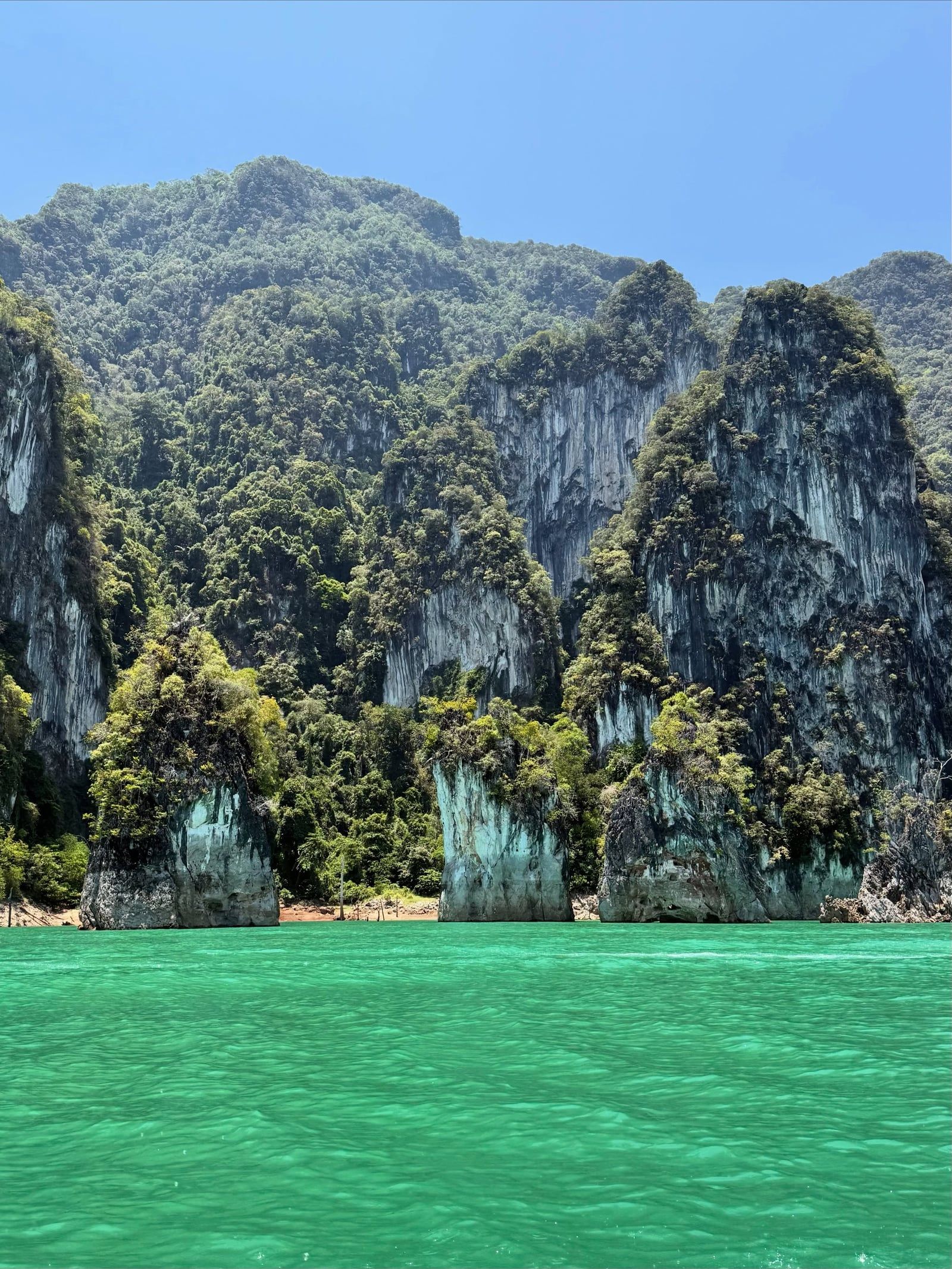
Cheow Lan Lake dominates the eastern half of the park. The 165-square-kilometer reservoir reaches depths of nearly 100 meters in the flooded river channels. Hundreds of limestone towers rise straight out of the emerald water, creating a landscape identical to Halong Bay in Vietnam. The Kri Sorn Viewpoint offers the clearest perspective of these formations. Visitors navigate the lake entirely by motorized long-tail boat. No roads penetrate the reservoir's perimeter. The water remains warm year-round, and the flooded trees below the surface provide a habitat for freshwater fish. The lake's edges feature dense bamboo thickets where wild elephants occasionally come down to drink at dawn.
The park's trail network centers around the Bang Laen River. The Sip-et Chan Waterfall trail stretches 8.4 kilometers through this dense river corridor. Hikers cross the water multiple times, navigating slippery rocks and deep mud. The canopy overhead blocks most direct sunlight, keeping the forest floor in perpetual shade. This dark, humid environment supports over 90 reptile species. Macaque monkeys patrol the lower branches near the campsites. They are highly habituated to humans and will grab loose food or bags if provoked. At night, the forest transforms. Guided night safaris around the headquarters reveal tarantulas, flying squirrels, and slow lorises moving through the trees.
The Rafflesia kerrii is the official provincial flower of Surat Thani. Local guides track the unpredictable blooming cycles of these massive parasitic plants, which open for only a few days between December and March. The flower's presence drives a significant portion of the region's dry-season ecotourism. Villagers from Khlong Sok and the surrounding areas rely on this seasonal influx. They work as mandatory trail guides for the steep hikes to the blooming sites. The national park regulations require these local guides for any remote trek, ensuring the tourism revenue stays within the immediate community.
The Ratchaprapha Dam is a major piece of infrastructure for southern Thailand. King Bhumibol Adulyadej gave the dam its name, which translates to "the light of the kingdom." The hydroelectric project brought reliable electricity to the southern provinces, but it required the permanent relocation of several farming communities. Many of these displaced families received logging concessions and land rights along the new lake's edge. They built the original floating raft houses that now define the Khao Sok tourist experience. The descendants of those displaced farmers still operate the majority of the long-tail boats on the reservoir.
Conservation practices in the park map to a broader regional shift in animal welfare. The older trekking camps that strapped rigid wooden chairs to elephants' backs have vanished from the park's perimeter. Local operators now run rescue-focused camps where visitors feed and walk alongside the animals. This model provides an economic alternative to the logging industry that historically employed captive elephants in the area. The shift proves that ethical wildlife observation generates more sustained income than exploitative labor practices.
The park administration enforces strict environmental laws to protect this ecosystem. Visitors cannot bring single-use plastics or polystyrene into the reserve. Collecting seeds, cutting live wood, or disturbing wildlife carries severe penalties under Thai law. The rangers rarely issue permits for drone flights, and flying without authorization results in a 100,000 Baht fine. These rules protect the water quality of the Sok River, which local villages use for agriculture and daily life. The ban on toileting near watercourses prevents contamination of the reservoir.
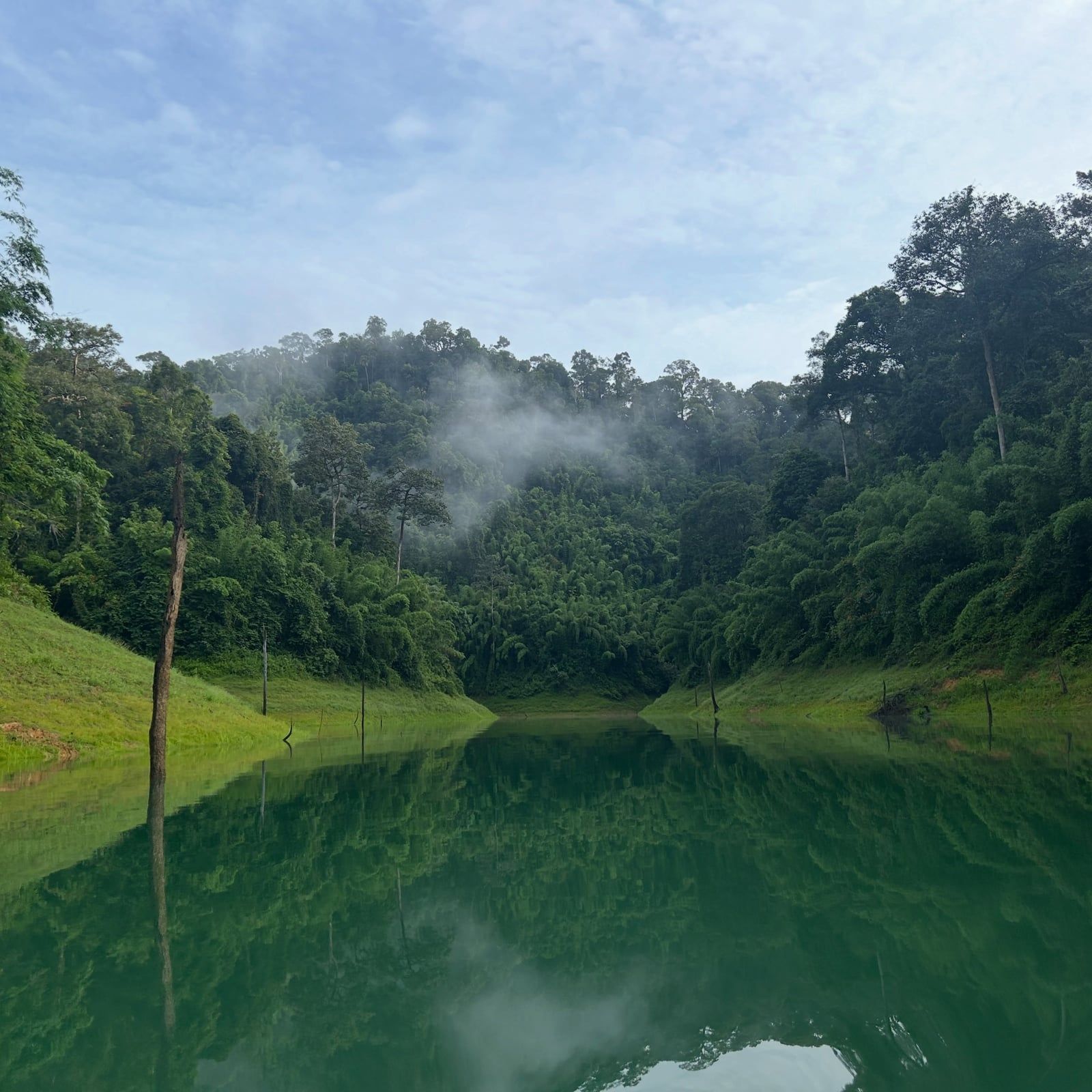
Khao Sok receives about 3,500 millimeters of rain annually, making it the wettest area in Thailand.
The park hosts the Rafflesia kerrii, a parasitic flower that grows up to 90 centimeters across and lacks visible leaves or roots.
Communist insurgents hid in the park's caves from 1975 to 1982, inadvertently saving the trees from commercial loggers.
Cheow Lan Lake did not exist before 1982; it is a reservoir created by the Ratchaprapha Dam.
The park and its adjoining sanctuaries shelter an estimated 200 wild Asian elephants.
The limestone karst towers rising from the lake are the remnants of ancient coral reefs pushed upward by tectonic shifts.
Flying a drone inside the national park without written permission carries fines of up to 100,000 Baht.
Foreign adults pay 300 Baht and children pay 150 Baht. The park headquarters and Cheow Lan Lake are separate zones, so you'll need to pay this fee at each location if you visit both.
The visitor center and headquarters area open daily from 08:00 to 16:30. Long-tail boats on Cheow Lan Lake can't operate before sunrise or after sunset.
You can walk the short, well-marked trails near the park headquarters independently. National park regulations require a licensed guide for longer treks, including the Nam Talu Cave route and multi-hour waterfall hikes.
Public buses and minivans depart Surat Thani town and the Phun Pin train station roughly every hour until 14:00. The ride takes one to two hours, costs 80 to 120 Baht, and drops passengers at Khlong Sok village.
The dry season from December to April offers the best trail conditions and lower humidity. September and October are the wettest months, bringing heavy downpours and frequent cave closures due to flash floods.
Yes, leeches are common on the jungle trails, particularly during the wet season. Their bites are harmless but cause minor bleeding. Wear long socks tucked into your boots to prevent them from attaching.
Drones are banned throughout the national park. You need prior written permission from the Department of National Parks in Bangkok to fly one, and unauthorized flights risk confiscation and a 100,000 Baht fine.
Most visitors stay for two or three days. A standard itinerary includes one night in Khao Sok village for jungle hiking, followed by one or two nights on Cheow Lan Lake in a floating raft house.
The park is safe for families, but activities should match the child's age. River canoeing and short nature walks suit young children, while teenagers can handle the muddy trails and river crossings required for cave treks.
The giant Rafflesia kerrii typically blooms between December and March. Each flower only lasts a few days, and finding one requires a steep guided hike into the forest.
Browse verified tours with free cancellation and instant confirmation.
Find Tours