Khao Sok National Park packs rainforest trekking, cave-wading and a limestone-studded lake into 739 square kilometers of southern Thailand. Picking what to do here comes down to one split: village-based jungle activities near the park headquarters, or the boat-and-raft-house world out on Cheow Lan Lake. Most travelers end up doing both.
This guide breaks down what's actually on offer in each zone — hiking, caving, wildlife-watching, paddling and elephant encounters — with the costs, distances and difficulty levels you need to build a real itinerary rather than a wish list.
Khao Sok at a Glance: Village vs. Cheow Lan Lake
Khao Sok's two activity zones sit roughly an hour's drive apart. The park headquarters and Khao Sok Village, strung along Highway 401, hold the main hiking trail network, waterfalls and the trailhead for night safaris. Cheow Lan Lake, reached via the Ratchaprapha Dam road, is a separate 165-square-kilometer reservoir dotted with limestone karst islands and floating raft-house resorts — a different landscape entirely, and one you can only reach by longtail boat. There's a fuller rundown of the park's layout on the Khao Sok visitor overview.
Most visitors base themselves in the village for a night or two of trekking and river time, then add an overnight (or two) at the lake. Squeezing both into one day is possible only if you skip nearly everything at one end.
Two separate 300-Baht entrance fees apply to foreign adults — one for the headquarters/village area, another for the Cheow Lan Lake and Ratchaprapha Dam zone, in effect since May 2024. Children pay 150 Baht at each gate, Thai nationals 40 Baht, and the lake pier adds a small boat-dock fee of around 40 Baht. Current rates and the park's daily 08:00-16:30 opening hours are worth checking on the hours and fees page before you go, since cash Baht is the only accepted payment.
- Less than a day: walk the village trail to the first waterfall or two.
- One full day: village trail plus a Sok River canoe trip.
- Two days or more: add an overnight at Cheow Lan Lake — it's the park's headline experience.
Cheow Lan Lake: Boat Tours & Floating Bungalow Stays
Cheow Lan Lake is the park's single biggest draw, and it works as either a day trip or, better, a floating overnight base for boat tours, a viewpoint hike and cave visits.
A Dam-Made Lake with Karst Islands
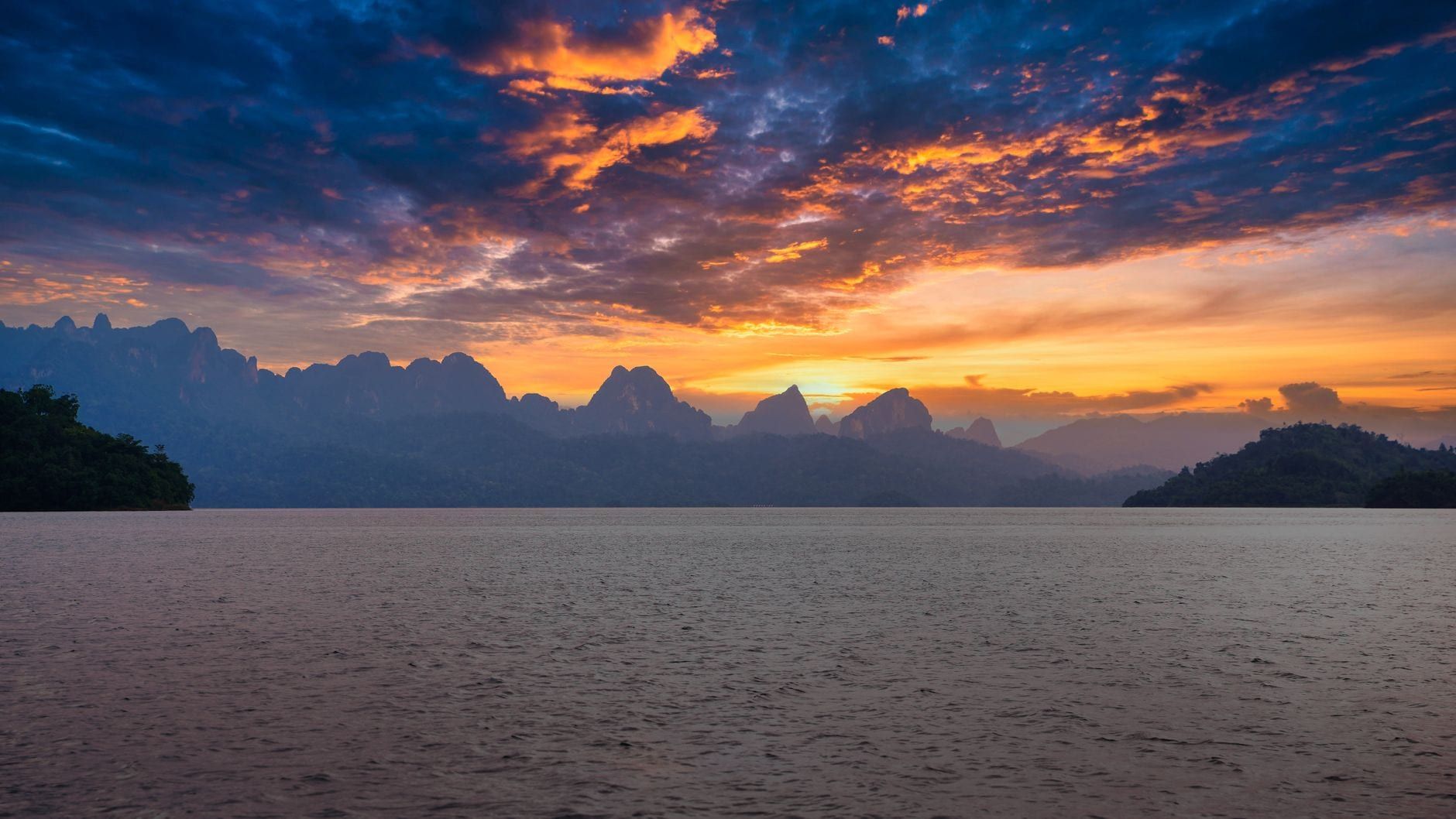
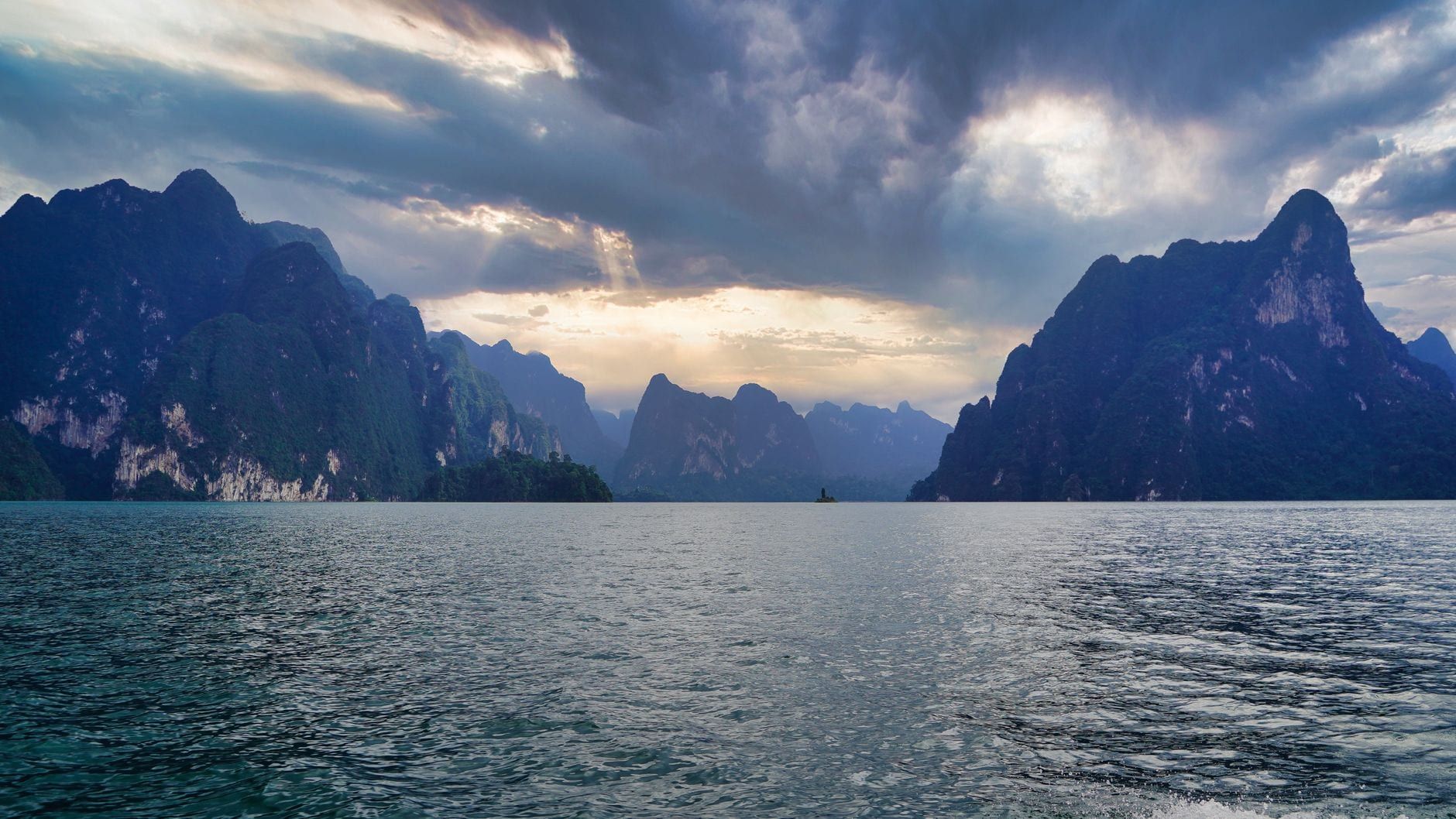
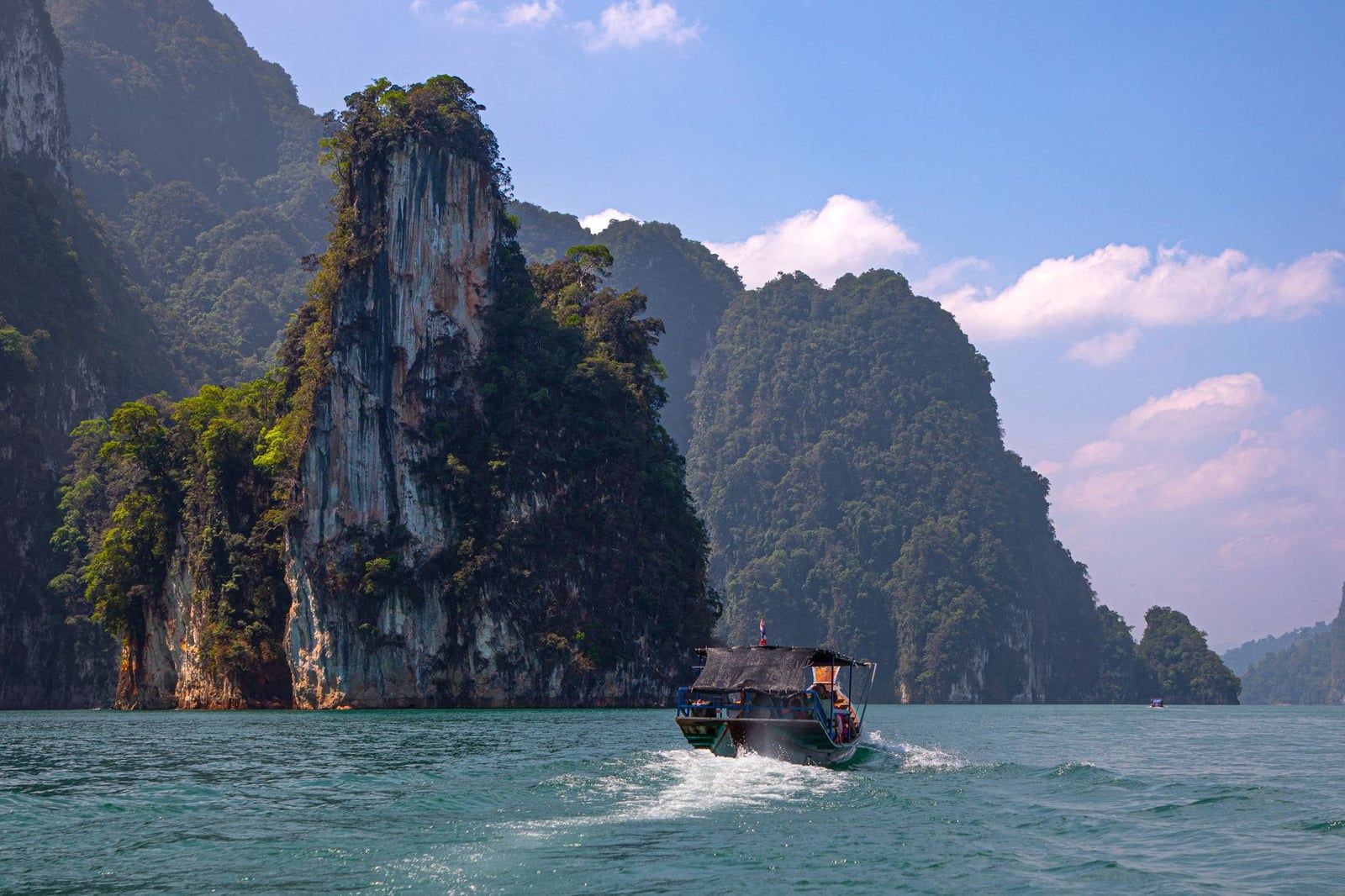
Cheow Lan Lake didn't exist before 1982, when the Ratchaprapha Dam flooded the valley for hydroelectric power, submerging the old village of Ban Chiew Lan and displacing hundreds of families. What emerged covers about 165 square kilometers, its surface broken by limestone towers that were once hilltops. It looks like a landlocked, jungle version of Halong Bay, and the scale only sinks in once your boat is dwarfed by the first cliff face.
Longtail Boat Tours
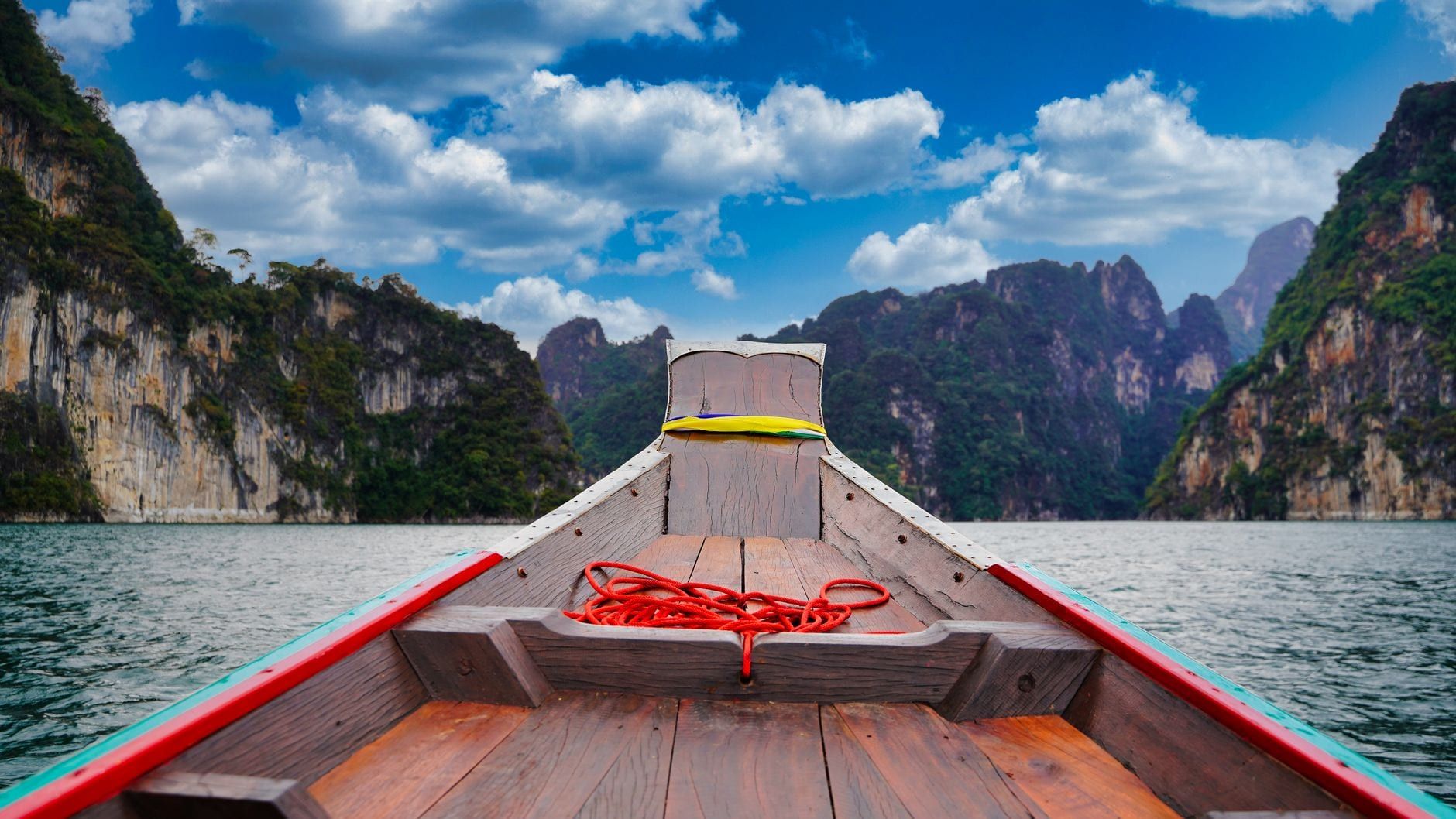
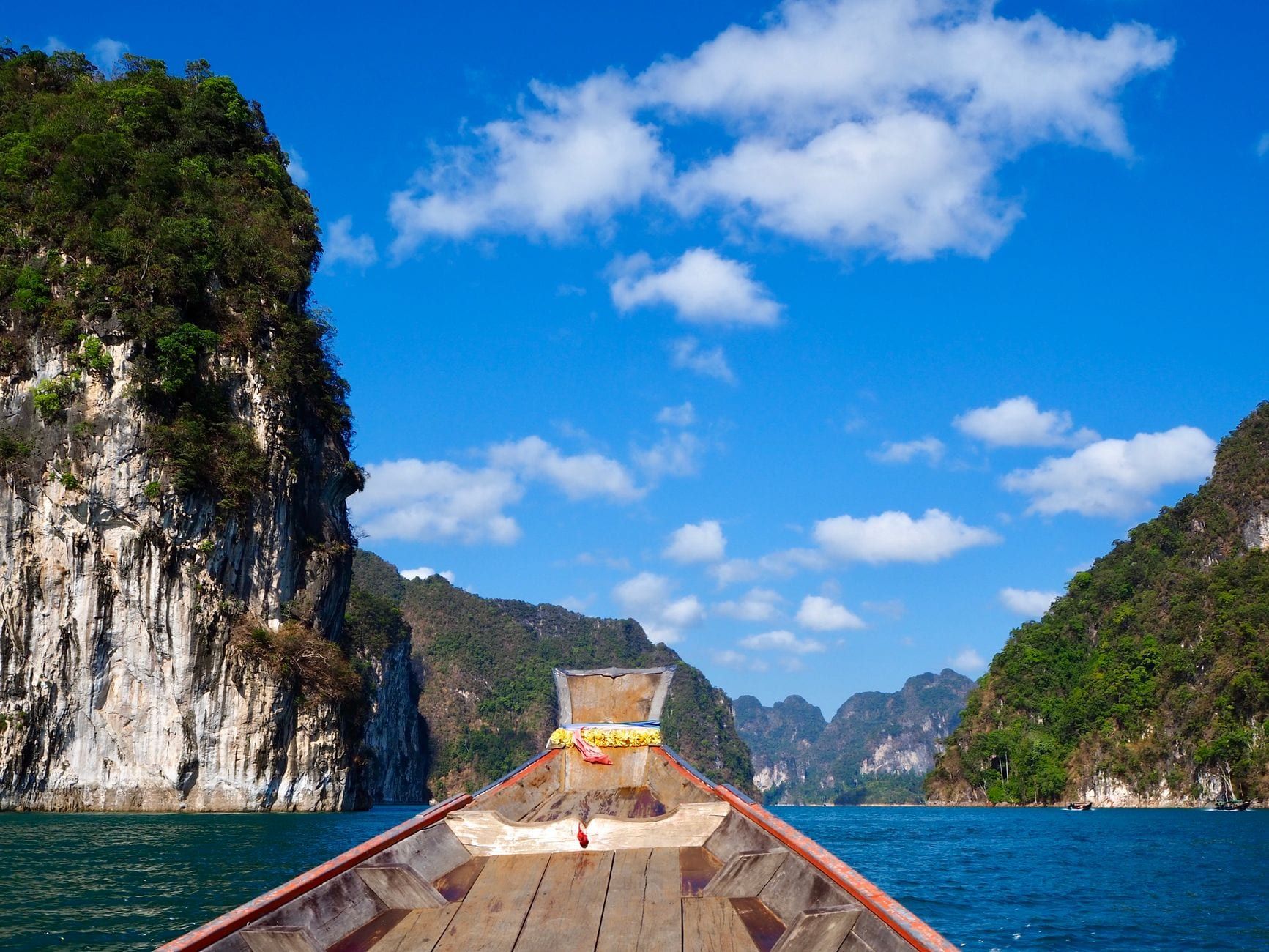
Boats leave from Cheow Lan Pier and thread between karst formations toward the raft-house resorts, a transfer that takes about 45 minutes. Along the way, guides slow for photo stops at the most dramatic towers and for wildlife on the shoreline — hornbills, macaques and, with luck, elephants coming down to drink. Boat tours range from short return trips to full-day lake circuits; none run before sunrise or after sunset, since the park restricts night boating on the lake.
Krai Son Viewpoint
A short, steep climb from a floating jetty leads to Krai Son Viewpoint, the lake's signature panorama of karst islands scattered across the water. Most overnight tours schedule the hike for early morning, when mist still clings to the cliffs and the light is softer for photos. It isn't a long walk, but the humidity makes it feel longer than it looks on paper.
Floating Bungalows: Basic vs Upgraded
Standard raft-house rooms are simple: a mattress on the floor, a shared cold-water bathroom, a wooden deck a few feet above the water. Upgraded operators such as 500 Rai Floating Resort and Panvaree Resort add en-suite bathrooms and sturdier construction, for a noticeably higher price. Either way, you're sleeping on the lake itself — swimming off the deck before breakfast and watching the karst towers change color at dusk are things a day-tripper never gets. Compare what's included across floating bungalow packages before booking, since meals, guides and transfers vary a lot between operators.
Cave Adventures: Nam Talu Cave & Diamond Cave
Two caves dominate the lake-side itinerary, and they suit very different comfort levels, so it's worth knowing which one matches your fitness and nerve before booking.
Nam Talu Cave
Nam Talu is the park's serious cave trek: an underground river route somewhere between 500 and 850 meters long, crossed mostly by wading, with short chest-deep swims in total darkness apart from head torches. Counting the jungle approach, the whole outing runs 2-3 hours, including roughly an hour of wading and at least 20 meters of swimming through the tightest sections. It only runs in the dry season — flash-flood risk closes it whenever heavy rain hits the catchment upstream, and guides cancel outright rather than take the chance.
Diamond Cave (Pra Kay Petch)
Pra Kay Petch, known as Diamond Cave, is the easy alternative: a roughly 15-minute walk-through past stalactites and stalagmites, no swimming required. It suits families with young kids, anyone with a knee injury, or travelers who want a cave photo without the commitment.
| Nam Talu Cave | Diamond Cave (Pra Kay Petch) | |
|---|---|---|
| Duration | 2-3 hours round trip | About 15 minutes |
| Difficulty | Wading and chest-deep swimming in darkness | Easy walk-through, no swimming |
| Season | Dry season only (flash-flood risk) | Year-round |
| Best for | Fit, adventurous travelers | Families and casual visitors |
Bring water shoes with grip and a dry bag for phones and cameras, plus a head torch if your guide doesn't supply one. Cotton clothes stay wet for the rest of the day — quick-dry fabric is worth packing specifically for cave days.
Jungle Trekking & Waterfalls Near the Park Headquarters
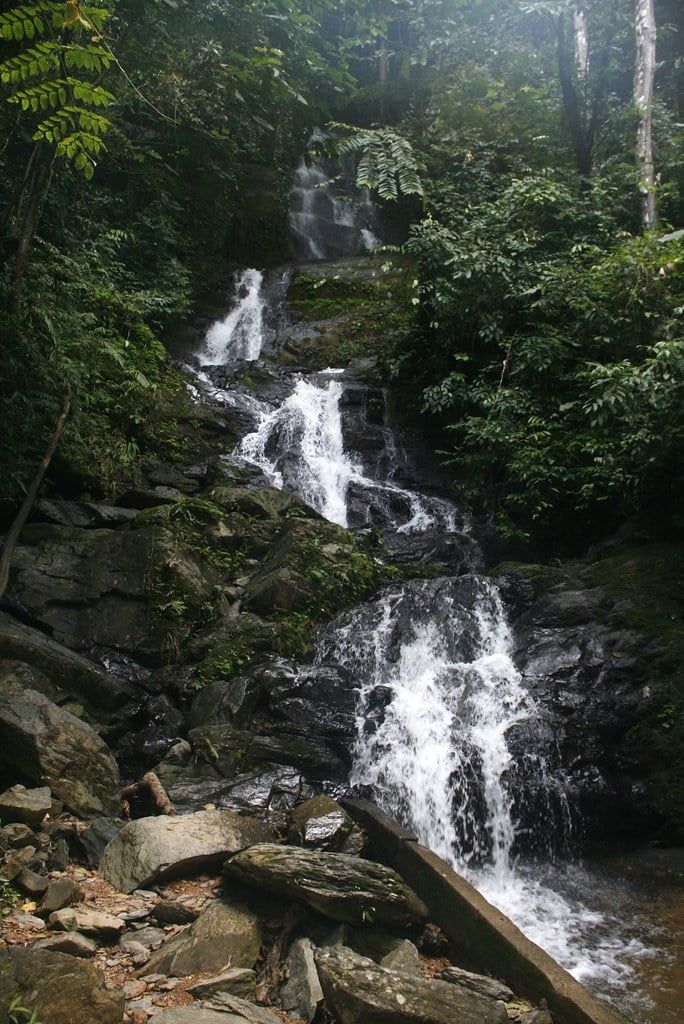
The main trail from the visitor center runs about 7 kilometers and passes nine points of interest, including five waterfalls, threading through rainforest older than the Amazon. You don't need a full day to get a feel for it — the first couple of waterfalls are reachable in an hour or two round trip.
Bang Liap Nam, Ton Kloi and Tan Sawan Waterfalls
Bang Liap Nam Waterfall sits 4.5 kilometers from headquarters, the usual turnaround point for a half-day hike. Ton Kloi Waterfall is just under 3 kilometers one-way, but the round trip still eats up about 6 hours given the terrain. Tan Sawan, 6 kilometers out, requires wading a riverbed for the final kilometer and is best skipped in the rainy season, when that crossing turns into a genuine hazard.
Guides, the Orchid Trail, and Rafflesia Detours
Officially, a licensed guide is required for hikes beyond the immediate headquarters area, and mandatory for anything on the lake side. In practice, rangers are informally relaxed about visitors walking unguided as far as point four, Bang Liap Nam. Beyond that, or onto the Orchid Trail where rafflesia hunts happen in season, book a guide through headquarters or a village travel agency. Guided jungle tours also know which side trails are flowering or flooded that week, information no map gives you.
Wild elephants do range through this trail network, and park signage asks hikers to keep their distance and stay alert if they spot fresh tracks or dung. Direct encounters are rare, but they happen, and a guide knows how to back away calmly rather than reach for a camera.
Wildlife Watching: Night Safaris, Birdwatching & Rafflesia
Khao Sok holds roughly 48 mammal species and somewhere between 300 and 400 recorded bird species, though most sightings on a short visit will be gibbons calling overhead, macaques near the trails, and hornbills crossing the canopy. The rarer animals — elephants, gaur, Malayan tapir, leopard cats — mostly show up at dawn or dusk, and mainly around the lake edges or on a guided night walk.
Night Safaris
Guided night walks near headquarters run 2.5 to 4 hours and use spotlights to pick out civets, slow lorises and mouse deer that never appear in daylight. Night safaris aren't permitted on Cheow Lan Lake itself, so this is strictly a village-area activity — plan it for the evening after a daytime trek rather than during an overnight lake stay.
Rafflesia Season
Rafflesia kerrii, Surat Thani's official flower, blooms from around December to March near the park headquarters trails, reaching up to 80-90 centimeters across when open. Each flower lasts only a few days and sightings depend entirely on timing and luck. A specialized guided hike up the steep forest trail is the only realistic way to find one in bloom.
Moths, Birds and Small Things
Dusk also brings out the giant Atlas moth, with a wingspan of 25-30 centimeters, one of the largest moths on earth and a reliable subject for anyone carrying a macro lens. Dedicated birdwatching tours target hornbills and forest specialists along the quieter side trails early in the morning, when the canopy is loudest and the light is best.
River Adventures: Canoeing, Kayaking & Bamboo Rafting
The Sok River corridor near the village is the low-key alternative to trekking — no boots required, no elevation gain, just water. Guided canoe safaris put an experienced paddler in the back of the boat while you watch for kingfishers, herons, monitor lizards and monkeys along the banks.
Cheow Lan Lake is the better spot if you'd rather paddle yourself: rent a kayak and explore the coves and karst walls at your own pace, away from the longtail boat traffic on lake tours. Bamboo rafting and river tubing near the village round out the options for a slower, splash-around afternoon that still counts as an activity. None of these need the fitness or guide requirements of the caves or longer treks, which makes them a solid pick for a rest day between bigger hikes.
Ethical Elephant Experiences
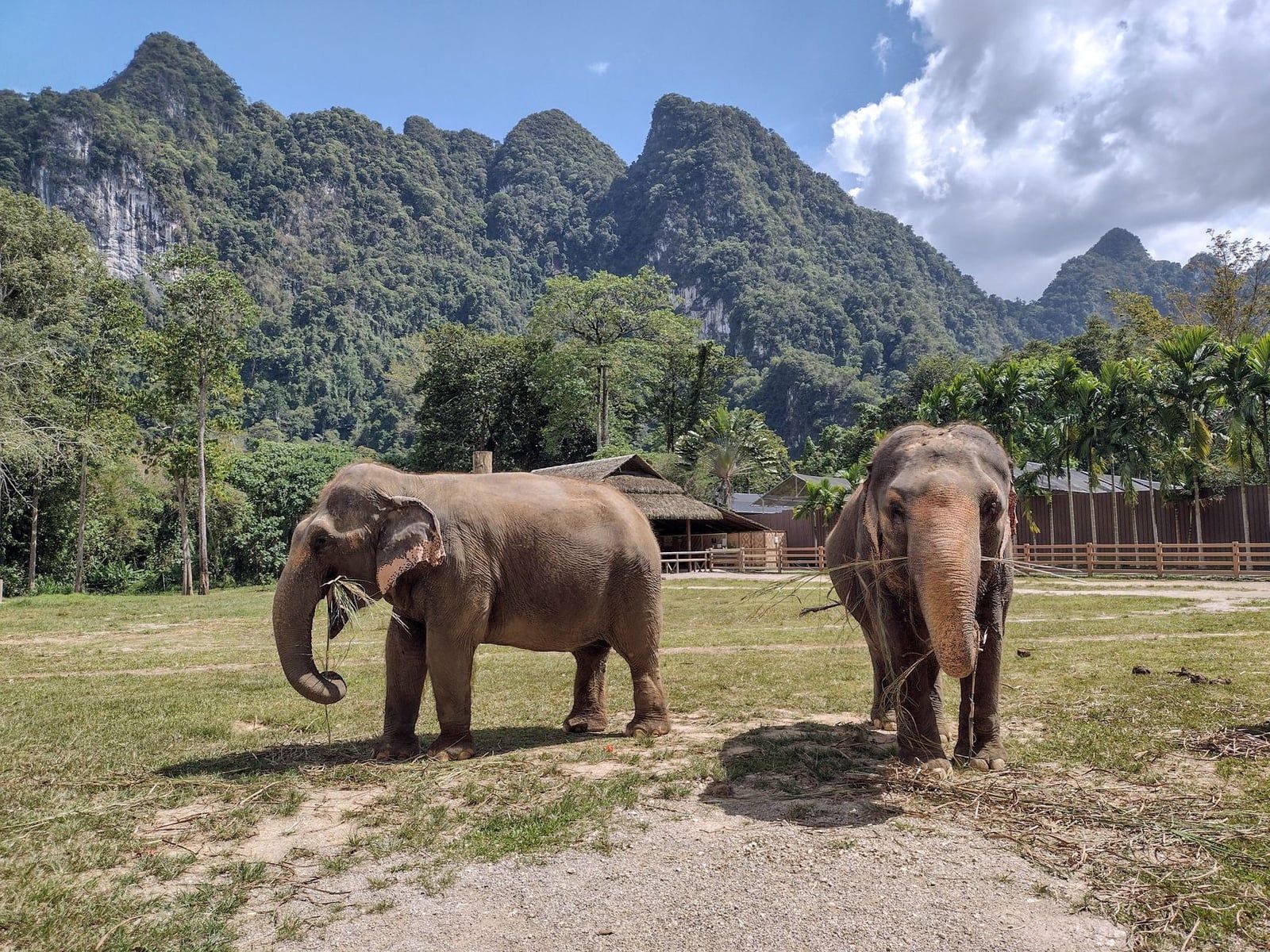
The elephant experiences worth booking in Khao Sok involve no riding. Visitors prepare food, walk alongside the elephants, and watch them bathe and forage under a mahout's guidance, usually as a half-day or full-day activity based near the village. It's a fundamentally different model from the old riding camps, where elephants carried rigid chairs and were trained through methods wildlife guides now flag as abusive.
Before booking, ask a straightforward set of questions: does the operator offer riding at all (a hard pass if yes), are chains used outside of feeding or sleeping times, and can they explain where their elephants came from. Camps built around rescued or retired working elephants, with feeding and bathing as the core activity, are the ones to look for. If an itinerary mentions a show or tricks, skip it.
Planning Your Trip: How Many Days, Costs, Best Time & Packing
How long to stay depends on how much of the above list you want to check off. A single day covers a short village trail and maybe a canoe trip. Two days with one night at Cheow Lan Lake is the minimum for the lake to feel worth it — you need the evening light, the early wildlife activity, and a proper night's sleep on the water, not a rushed afternoon loop. Three to four days lets you add cave treks, a longer waterfall hike and an elephant experience without stacking too much into one day.
| Trip Length | What You Can Realistically Do | Best For |
|---|---|---|
| 1 day | Short village trail, one or two waterfalls, Sok River canoe | Travelers passing through en route to Phuket or Krabi |
| 2 days / 1 night | Village trail plus an overnight at Cheow Lan Lake, boat tour and viewpoint hike | First-time visitors who want the lake without a long detour |
| 3-4 days | Add Nam Talu Cave, a longer waterfall hike, an elephant experience or night safari | Wildlife-focused travelers and photographers |
Dry season, November to April, gives the clearest skies and easiest trail conditions, and includes the rafflesia window from December to March. It's also the busiest and priciest stretch, with floating bungalows booking out well ahead. September and October are the wettest months and the riskiest for cave closures and swollen trails. Shoulder windows — May to early July, or September to early November — trade a bit of rain for thinner crowds and easier boat bookings.
Buses and minivans from Surat Thani run roughly hourly until early afternoon and take 1-2 hours; from Phuket it's a 5-6 hour bus ride, and Krabi connects by minivan in about 3.5 hours. Surat Thani's airport is the closest, roughly an hour from the Cheow Lan Lake pier by taxi. Full route options and current schedules are on the directions page.
A licensed guide is mandatory for the lake hikes, cave treks and night safaris, and for anything past Bang Liap Nam on the main village trail; the short waterfalls closer to headquarters can usually be walked solo. If you're booking a multi-day trip anyway, an overnight package bundles the guide requirement into the price, which is simpler than arranging one separately for each activity.
- Water shoes or grip sandals for caves and river crossings
- A dry bag for phones, cameras and cash
- A head torch (some tours provide one, many don't)
- Insect repellent and a lightweight rain jacket
- Quick-dry clothing — cotton stays wet all day
Cover up when bathing in rivers or waterfalls rather than swimming nude or in minimal swimwear; it reads as disrespectful locally. Carry out your own rubbish, skip the soap and shampoo in natural water, and leave dead wood only — cutting live branches for a campfire isn't allowed. Small rules, but they're the reason the forest still looks the way it does after more than 40 years of visitors.
Frequently asked questions
How many days do you need in Khao Sok?
Budget at least 2 days and 1 night to see Cheow Lan Lake properly, and 3-4 days if you also want village trekking, caves and an elephant experience.
Is it better to visit Cheow Lan Lake on a day trip or stay overnight?
Stay overnight. Day trips from Khao Lak or Krabi work but skip the evening light, night wildlife activity and dawn boat rides that make the lake worth the detour.
Do you need a guide to hike in Khao Sok?
Yes for anything beyond the first few points on the main village trail, and for all lake hikes and cave treks; the short waterfalls near headquarters can usually be walked solo.
What is the entrance fee for Khao Sok National Park?
Foreign adults pay 300 Baht at the park headquarters and another 300 Baht at the Cheow Lan Lake/dam area; children pay 150 Baht at each, plus a small lake pier fee.
When can you see the rafflesia flower in Khao Sok?
Roughly December to March, near the park headquarters trails, though each bloom lasts only a few days and sightings aren't guaranteed.
Can you ride elephants in Khao Sok?
No. Reputable operators offer feeding, walking and bathing only, and warn against camps still advertising elephant rides.
What's the best time of year to visit Khao Sok?
November-April for dry trails and clear lake views, though it's also the busiest season; May-early July and September-November trade some rain for fewer crowds.
What wildlife can you realistically see in Khao Sok?
Gibbons, macaques and hornbills on most days; elephants, tapir, leopard cats, civets and slow lorises mainly at dawn, dusk or on a guided night safari.